A swimming pool offers a refreshing escape from the summer heat and provides a space for relaxation and exercise.
However, maintaining their pristine quality is essential to your enjoyment of your swimming pool. It requires consistent effort to keep a good pool in shape, but it’s worth it.
Learn Your Swimming Pool Chemistry
When it comes to swimming pool maintenance, the water’s chemistry is a major component.
Imbalances in pool water can lead to unpleasant conditions such as algae growth, cloudy water, and even skin or eye irritation for swimmers. Here’s what to know:
pH Levels
Arguably, the most fundamental element to monitor is the pool’s pH level.
A pH scale ranges from 0 to 14, with 7 being neutral. Ideally, pool water should maintain a slightly alkaline pH level between 7.2 and 7.8. If the pH skews too high or low, it can affect the efficacy of chlorine and other sanitizers, as well as cause discomfort for swimmers.
Chlorine and Sanitizers
Chlorine remains the most popular choice for sanitizing pools.
It works by breaking down organic contaminants and bacteria, ensuring safe water for swimmers. However, for chlorine to work effectively, it needs to be within the correct concentration range.
Too much chlorine can cause skin and eye irritation, while too little allows for the proliferation of bacteria and algae.
Alkalinity and Calcium Hardness
Alkalinity is often overlooked, but it acts as a buffer for the pH levels, preventing drastic fluctuations.
A balanced alkalinity level will aid in stabilizing the pH, making it easier for you to maintain. Similarly, calcium hardness is crucial, as it prevents the water from becoming corrosive or causing scaling. The ideal range for calcium hardness is between 100 to 400 parts per million (ppm).
Keep Up With Routine Swimming Pool Maintenance
Routine maintenance ensures a swimming pool remains clear, clean, and free from potential health risks.
It involves more than just adjusting chemicals, though. Proper cleaning and regular inspections are also necessary.
Skimming and Vacuuming
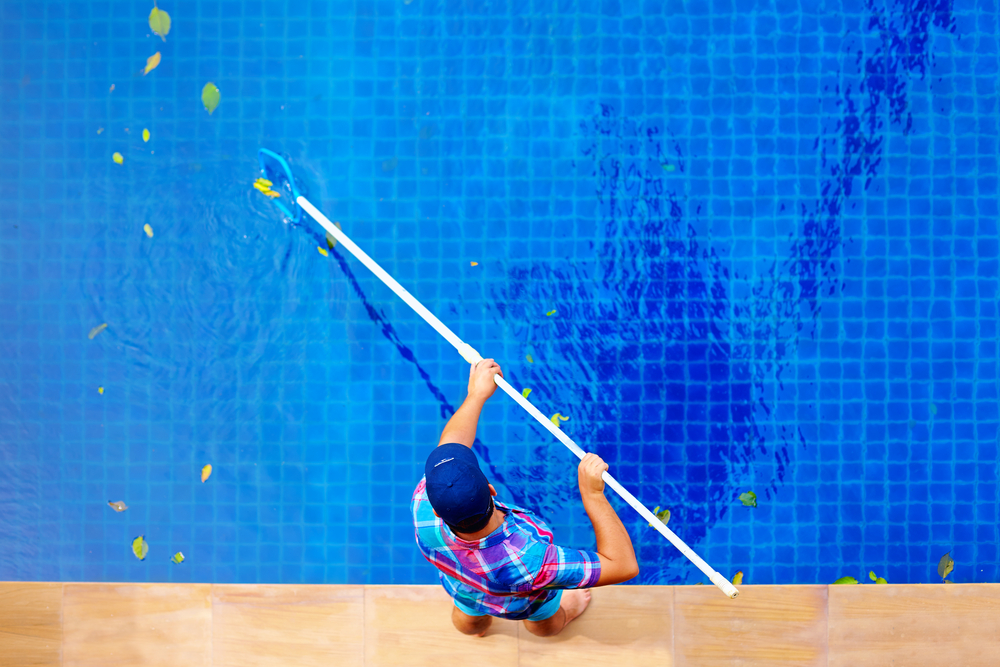
Regularly removing debris, such as leaves and insects, is crucial to maintain water clarity.
Using a pool skimmer daily can make this task simpler. Additionally, vacuuming the pool at least once a week will help remove dirt that settles at the bottom, preventing potential staining and reducing the strain on the pool filter.
Filter Maintenance
The pool filter removes impurities from the water, and, depending on the type of filter you have (sand, cartridge, or diatomaceous earth), the maintenance requirements will vary.
Be sure to ask pool professionals or consult your filter owner’s manual to make sure you’re cleaning at the right intervals for your filter type.
Regular Water Testing
To ensure that the pool’s chemistry remains balanced, regular water testing is highly recommended.
While home testing kits are available, they offer only a basic understanding of the water quality. If you need a more comprehensive analysis, taking water samples to a professional pool store periodically can be your best bet.
Dealing with Algae and Stains
No pool owner wants to see green, murky water or unsightly stains on the pool surface.
Algae growth can be curtailed by maintaining proper chlorine levels and regularly brushing the pool walls and floor. Stains, on the other hand, can be caused by metals in the water or organic debris.
Identifying the cause of the stain will dictate the appropriate solution, whether it’s adjusting the water chemistry or using a specialized stain remover.
Prevent Swimming Pool Contamination
While maintaining pool chemistry and engaging in routine maintenance is fundamental, preventing contaminants from entering the pool in the first place can significantly reduce the workload for you.
Use a Proper Pool Cover
Using a pool cover, especially during off-hours or off-season, can be an effective way to keep debris out.
Not only does this reduce the need for skimming, but it also prevents larger debris like branches or toys from falling into the pool. Additionally, pool covers can help conserve water by reducing evaporation, and they can also retain pool heat.
Shower Before Swimming
One simple yet often overlooked measure is encouraging swimmers to shower before entering the pool.
Oils, lotions, and other contaminants from the body can contribute to water cloudiness and can even strain the filtration system. If everyone takes a quick rinse before diving, this can significantly reduce these contaminants.
Pets and the Pool
While many enjoy letting their pets swim, it’s worth noting that animal fur and dander can introduce additional contaminants to the pool.
If pets are allowed in the water, ensure they are clean, and know that you may have to increase the frequency of your pool maintenance to keep up.
Addressing Seasonal Challenges
The different seasons present unique challenges for swimming pool maintenance.
Being aware of these seasonal shifts can help you prepare and adapt, ensuring your pool remains in optimal condition throughout the year.
Spring Preparation
As winter concludes and temperatures start to rise, it’s time to get the pool ready for the warmer months ahead.
Begin by removing and cleaning the pool cover, then thoroughly inspect the pool for any signs of damage or wear. This is also the perfect time to check pool equipment, ensuring pumps, filters, and heaters are operational.
Once a visual inspection is completed, test the water chemistry and adjust as necessary, priming the pool for frequent use. If you start the spring by filling your pool with quality water from Taylor Farms Water Hauling, you can be sure the water is already perfectly chlorinated for your pool.
Summer Vigilance
Summer is the prime season for pool usage.
With the increased swimmer load, it’s vital to frequently test water chemistry, sometimes even daily, depending on usage. Increased sunlight can also cause chlorine to dissipate faster, so regular adjustments might be required.
Additionally, with the possibility of summer storms, it’s essential to be prepared for debris and contaminants that can be introduced to the pool.
Autumn Precautions
As leaves begin to fall, pools can become filled with organic debris.
Regular skimming becomes even more vital during this period. Moreover, as temperatures drop and daylight decreases, the pool’s pH level can fluctuate. Regular testing and adjustment of the pH can prevent issues related to water imbalances.
Winterizing Your Swimming Pool
Winterizing the pool involves lowering water levels, draining pipes to prevent freezing and potential damage, and using a winter pool cover.
Even if the pool isn’t in use, it’s good practice to periodically check the water chemistry and ensure the cover remains secure.
Choosing Taylor Farms Water Hauling
For those times when fresh water is needed, either for topping off the swimming pool or after a partial drain, the source of that water matters.
Choose Taylor Farms Water Hauling. As a reputable water hauling service we deliver high-quality, treated, and tested water suitable for your swimming pool.
Maintaining a sparkling clean swimming pool is a combination of science, with the right chemical balance, and regular care, such as skimming, vacuuming, and equipment checks. The reward of a well-maintained pool is worth every effort, though, especially when you see your loved ones enjoying your sanctuary of relaxation and enjoyment.
If you’re searching for clean, locally sourced water for your swimming pool, large event, construction site, or emergency service your search is over!
Taylor Farm’s Water Hauling is the area’s leader in water delivery for West Virginia, Maryland, Virginia and limited areas of Pennsylvania. You may contact us online or call us at 304.229.1194. We deliver water for any size swimming pool or hot tub, ponds, and cisterns. We also provide potable water for events and emergency services.