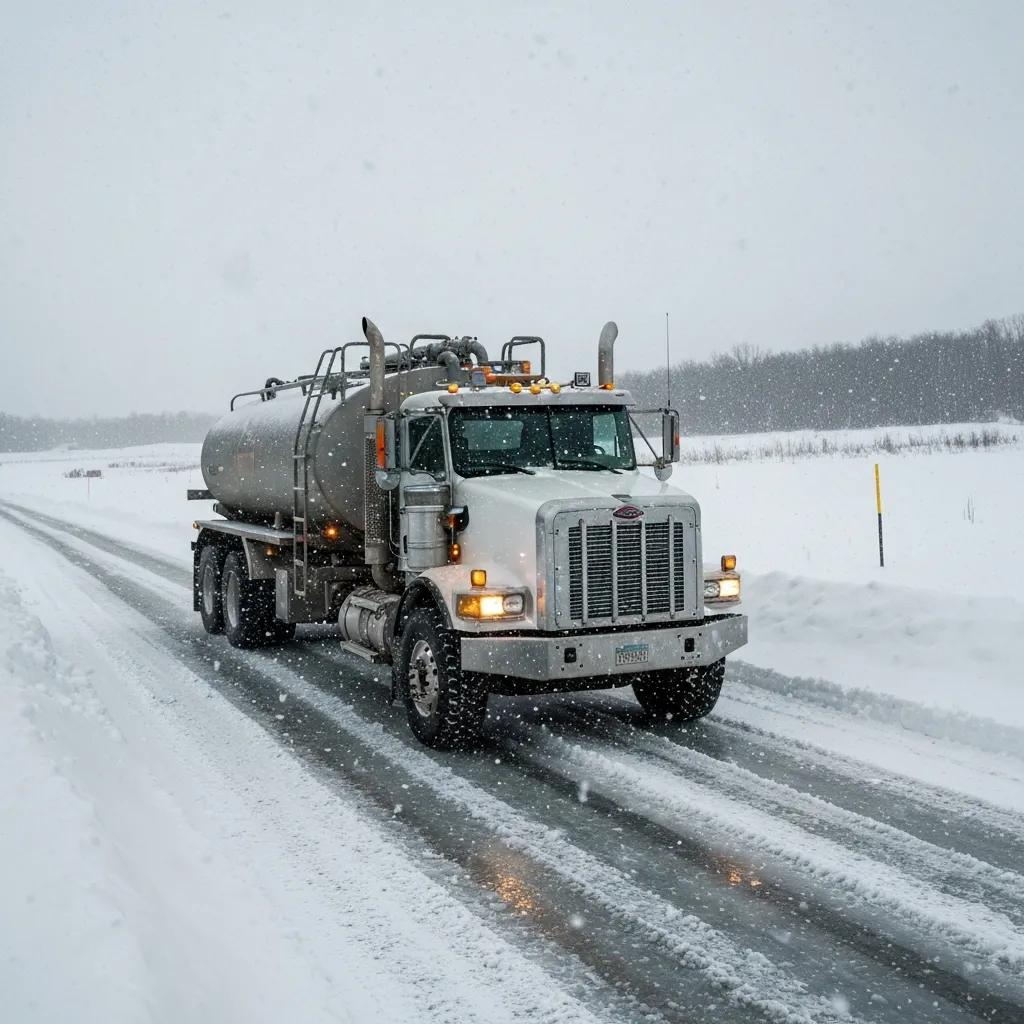
When winter hits, commercial water hauling, which involves getting large amounts of water delivered, is key for construction, factories, emergencies, and remote places that need clean drinking water. Cold weather can make it hard to get water from city pipes or on-site sources.
This article will show how getting water delivered in cold weather helps keep projects on schedule, keeps workers healthy, and stops expensive delays. It provides extra water, drinking water, and water for dust control, even when it’s freezing.
What Makes Delivering Water in Winter So Hard?
Delivering water in winter comes with specific problems related to how things work, how they’re planned, and safety. These problems directly affect how reliably water can be delivered and how well projects turn out.
Cold temperatures can freeze hoses and tanks. Snow and ice can block roads and make it hard to park trucks, causing delays that push back project deadlines. Planning becomes trickier because there are fewer good weather days, less daylight, and more time needed for unexpected problems.
This means you need to book deliveries earlier and work more closely with water suppliers and site managers. Safety rules for drinking water versus non-drinking water add more steps, like checking temperatures and cleaning, which makes deliveries take longer and requires special rules for drivers. Some main challenges we face include:
- Hard to get to sites: Snow, ice, and narrow or gated roads make it tough for trucks to move and safely unload water.
- Freezing and temperature control: Hoses, meters, and temporary water tanks can freeze and break if they’re not insulated or heated.
- Scheduling and timing: Short periods of good weather and less daylight mean you need to book deliveries sooner and plan for possible delays.
- Safety and rules: Delivering drinking water requires checking temperatures and extra steps to meet health standards.
What Winter Problems Affect Water Supply for Construction and Factories?
Winter problems include frozen storage tanks, pumps that don’t work as well, and the need for insulated or heated pipes to keep water clean and flowing on site. Pumps and valves might need winter maintenance or extra heat because water gets a little thicker and causes more friction in cold temperatures. This affects how much pressure the water has and how accurately meters measure it.
Dealing with these problems means workers follow special steps like winterizing equipment, doing regular maintenance, and using temporary heated storage to keep water flowing and meet rules in cold weather.
How Does Commercial Water Hauling Help Construction Projects in the Cold Season?
Winter construction water delivery provides exact amounts of water to keep concrete strong, help compact soil, and control dust. This is important when natural moisture and freezing/thawing cycles could otherwise ruin the work.
Getting large amounts of water delivered provides extra water for curing concrete, helps wet soil for compacting foundations, and supports dust control, even when snow or frost limit other water sources. Planning water amounts and delivery times around freezing periods and concrete heating needs reduces the risk of problems caused by freezing and keeps projects on schedule.
The table below compares common construction uses, their winter water needs, and time limits to help project managers plan orders and staging.
| Job Type | Typical Winter Water Needed | Timing / Rules |
|---|---|---|
|
Curing concrete |
50–300 gallons for each part poured |
Deliver within 24 hours of pouring; keep surface from freezing |
|
Dust control |
100–1,000 gallons per acre for each treatment |
Apply before strong winds are expected; might need to repeat after snow melts |
|
Compacting/wetting site |
100–500 gallons for each pass of equipment |
Have water ready for when compaction happens and during warmer midday hours |
What Are the Best Ways to Prepare a Site for Water Supply in Winter
The best ways include scheduling deliveries ahead of time with extra time for problems, setting up temporary insulated storage near work areas, and planning to unload water during warmer midday hours to lower the risk of freezing. Guess your water needs carefully, then add an extra 10–20% for winter to cover repeated treatments or delayed access.
Clearly label tanks for drinking water and non-drinking water to avoid mixing them up. Use insulated pipes, heated transfer loops, or portable heaters if allowed to keep hoses working. Also, keep talking clearly with drivers about sudden route changes due to weather.
These steps reduce emergency orders and make truck routes better, making sure the right amounts of water are there when crews need them most.
Why Is Water Supply So Important for Factories in Cold Weather?
Factories need a steady supply of extra water and process water to keep boilers, cooling systems, and manufacturing running, as these don’t stop for the seasons. If city water stops or frozen pipes cut off the flow, delivered water acts as an immediate backup to prevent unexpected shutdowns or safety risks for factory processes. To keep things running, delivery schedules must be planned with system monitoring so that extra water arrives before low-level alarms stop operations.
How Does Commercial Water Hauling Keep Factories Running in Winter?
Water delivery keeps factories running by providing extra water for boilers, heat-treating baths, and closed-loop cooling systems when the regular water supply isn’t reliable or when extra storage is needed as a backup. Water delivery helps with planned maintenance and emergency top-offs, stopping sudden temperature changes and production halts that happen when supplies unexpectedly drop.
Workers should match delivery times with system sensors and have backup tanks big enough to run for at least one full shift if service stops. Close teamwork between factory engineers and water delivery companies makes sure the truck-to-tank connection follows quality checks and temperature rules to protect equipment and meet process needs.
Commercial Water Hauling During Emergencies and Winter Disasters?
Emergency water delivery becomes vital when winter events cut off normal water supplies or create immediate health, sanitation, or operational dangers that can’t wait for city services to be fixed. Reasons for needing emergency water include ice storms, frozen or burst water pipes, power outages that stop pumps, and quickly running out of water on site during long cold spells.
Fast delivery of large amounts of water helps lessen these problems by providing drinking water for people and washing, extra water for boilers and important systems, and large amounts for temporary fire protection or sanitation needs.
What Winter Events Make Emergency Water Delivery Necessary?
Common reasons include severe ice storms that physically damage water pipes, long freezes that cause main pipes to burst, and power outages that stop pumping stations. Each reason has different levels of urgency: drinking water and sanitation for human health are top priority, followed by important process water to prevent equipment damage.
Deciding how urgent it is means figuring out if the event threatens human safety, following rules, or essential operations. This then guides whether immediate tanker delivery, setting up a temporary drinking water station, or planned recovery logistics are needed. Quickly sorting out and sending water delivery trucks reduces the time customers are without safe water.
How Does Commercial Water Hauling Help with Power Outages and Frozen Pipes?
Commercial water hauling helps with outages by providing temporary drinking water, supplying extra water for boilers and factory systems, and allowing for flushing or filling procedures to find and manage frozen pipe sections until repairs are done.
Water companies bring trucks with hoses, meters, and connectors set up for quick hookup. They work with site managers to set up temporary water systems that use gravity or pressure as needed. Communication plans include estimated arrival times, confirming water amounts, and safety checks to make sure the delivered water is used for its intended purpose—drinking versus factory use. These actions keep important operations running and protect health and safety while repair crews fix the permanent water system.
How Does Commercial Water Hauling Keep Remote Winter Sites Safe?
Delivering drinking (potable) water to remote winter sites keeps crews healthy, follows sanitation rules, and provides reliable water for drinking and washing when city water isn’t practical or is cut off. Water delivery brings tested, safe drinking water in large amounts or through temporary drinking water stations.
These are protected from dirt and freezing when set up and insulated correctly. Making sure there’s safe drinking water reduces the risk of illness, keeps spirits up and workers productive, and helps meet rules for the number of people and sanitation at remote work sites and events.
What Solutions Does Commercial Water Hauling Offer for Remote Places?
Cold season drinking water solutions include delivering large drinking water tanks, temporary drinking water stations with insulated pipes, and pre-filled portable containers placed near work zones to reduce exposure during distribution.
Each option balances how much water is delivered, how well it’s protected from cold, and how fast it can be given out: large tanks serve bigger crews for several days, while portable dispensers offer water on demand for smaller crews and events. Tips for planning include putting tanks in sheltered spots, insulating or heating short transfer hoses, and labeling drinking water outlets to stop them from being used for non-drinking water.
These solutions make sure crews have reliable access to safe water, no matter how remote the site or what the weather is like.
What Are the Benefits of Working with Taylor Farms Water Hauling for Water Needs?
Working with Taylor Farms Water Hauling gives customers trucks ready for winter, service areas across WV, VA, MD, and PA, and a mix of services including drinking water for events, construction water, factory supply, dust control, filling pools and cisterns, and emergency water services.
A good partner makes planning easier by providing winter-ready equipment, flexible scheduling, and local knowledge about access and permit challenges. Customers benefit from clear delivery rules, optimized local routes, and winter-specific checks that reduce downtime and help meet rules for drinking water deliveries.
We keep our trucks ready through preventative winter checks, getting equipment ready for the season, and driver rules that focus on safe routes and handling hoses and meters in cold weather. Operational steps include winter-grade connectors and insulated transfer lines for drinking water jobs, scheduling plans that prioritize daylight deliveries and extra time for problems, and working with site crews for clear access.
These steps reduce the chance of frozen parts and missed delivery times, making sure that extra water, dust control, and emergency water arrive when needed.
Are You Searching For Commercial Water Hauling To Service A Construction Site, Factory, or Provide Emergency Water Services This Winter?
The winter brings challenges for many different industries. If you need commercial water hauling this winter, please contact us online or call our Inwood, West Virginia office directly at 304.229.1194. We proudly serve West Virginia, Maryland, Virginia, and Pennsylvania.