Emergency water delivery for businesses is a fast service that brings clean drinking water (potable) and other water (non-potable) when a building’s regular water supply stops. This helps keep businesses running, safe, and following rules. This article will explain why businesses need emergency water, how to make a plan for when water goes out, what kinds of water services are available, and how to work with companies that deliver water to avoid stopping work and reduce problems.
Why Is Emergency Water Delivery So Important for Businesses?
Emergency water delivery is very important because it brings back the water businesses need to keep working, stay clean, and follow laws. It works like this: a water delivery company brings clean, approved water and sets up tanks or pipes to replace or add to a broken water source. This lets the main business activities continue and stops people from getting sick.
The main benefit is that it cuts down on lost work time and money, while keeping your workers, customers, and products safe. Knowing how water problems directly affect your business helps you decide what to do first and how much water you’ll need and how often it should be delivered during an outage.
Businesses usually lose water because of a few main reasons: natural disasters (like hurricanes or floods), broken pipes (like water main breaks), droughts and city water limits, or equipment failures like pumps or power outages. Each problem stops water in a different way.
Businesses should think about all of these different factors when figuring out their risks. Knowing these main causes helps businesses pick the right ways to deal with problems.
How Do Water Problems Affect Business Work and Money?
When water is short, businesses immediately face problems that lead to lost money and cleanup costs, especially for hotels, restaurants, factories, and construction. For example, a restaurant without clean drinking water has to close or only serve pre-packaged food. This means lost sales and food that might go bad.
A factory might have to stop making products if it can’t cool machines or clean machine parts. Cleaning up or getting approval after water gets dirty also costs more time and money. Deciding which tasks are most important and figuring out how much water they need helps businesses deal with problems during an outage.
How Can Businesses Make a Good Plan for Water Outages?
A good plan for a water outage starts by looking at risks and needs in an organized way. Knowing how much water you need each day helps you decide on tank sizes and delivery amounts.
- Find and list all the important tasks and operations that need water.
- Guess or use estimates on how much water each important task or department needs daily and at its busiest times.
- Figure out what water storage, pipes, and treatment systems you already have on site.
- Point out any single weak spots (like only one main water pipe or one pump) and plan how to fix them.
- Give people jobs, keep a list of water supplier contacts, and plan practice drills to make sure your plan works.
To figure out your business’s water needs, you need to decide which uses are very important and which are not. You also need to measure how much water you normally use and guess how much extra water you’ll need for risky situations. Start by listing everything that uses water. Then, mark each use as important for safety, compliance, or making money. If you have past water bills, use that data.
Otherwise, use common estimates to guess your highest daily need and how much water you should keep in reserve. Think about how long it takes to get water, how often suppliers can refill your tanks, and any limits on your site like pumps or hose connections. This check will give you goals for how much water to order and store.
What Kinds of Emergency Water Services Are There?
Emergency water services come in different types: delivering large amounts of drinking water after a natural disaster or other emergency, potable and non-potable water after a water main brake or pipe failure, health and safety compliance for hospitals and restaurants, water for cooling systems in factories, clean water for construction and dust control, and fire suppression for industrial sites or fire emergencies.
Natural disasters and broken pipes stop water supply by making water dirty, damaging the pipes that carry water, and stopping water treatment plants or pump stations from working. How it happens depends on the event: floods can bring in germs and chemicals, making water unsafe. Hurricanes can damage water treatment and pumping systems. And droughts or city rules can reduce how much water is available.
The benefit to being prepared is that different problems need different solutions. For example, you might store drinking water before a storm, but need fast water delivery for a broken pipe. So, your plan must be specific to the danger.
For hurricanes and floods, businesses should store sealed, clean drinking water ahead of time. They should also raise or seal storage tanks to keep water clean and plan safe places for emergency trucks to deliver water after the event. Before a storm, move important water storage above areas that usually flood. Also, write down how supplier trucks should unload water to avoid confusion during cleanup. After floodwaters go down, use only approved drinking water until the city tests and says the regular water is safe.
When a water main breaks or other pipes fail, the first step is to keep important tasks going with temporary clean water. You also need to work with the city water company to find out when water will be back. For a short time, you can use bottled water for drinking and washing, and tanker trucks can bring clean water for cleaning and other important work. Focus on tasks that affect safety or money first. Decide which things are most important—like emergency services, food safety, and key factory work—so that water deliveries go where they’re needed most.
Why Pick Taylor Farms Water Hauling for Your Emergency Water?
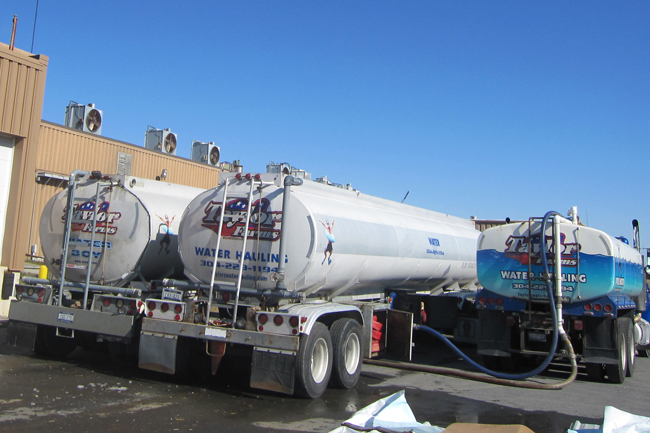
At Taylor Farms Water Hauling, we’re a family-owned, veteran run business. We provide emergency water in the Eastern Panhandle of West Virginia and nearby areas of Maryland, Virginia, and Pennsylvania. We’ve been the areas leading water delivery company for over 30 years and are experts in delivering large amounts of clean, potable and non-potable water in emergency situations. Our emergency phone line, 304.229.1194, can be used for urgent calls and a main contact for prices and scheduling.
Do You Need Water Delivered To Your Home Or Business Due To An Emergency?
If you’ve been impacted by an emergency, natural disaster, or a power outage and need water delivered right away, Taylor Farms Water Hauling is here to help. Please contact us online or call our Inwood, West Virginia office directly at 304.229.1194. We service businesses and homes in dire need of emergency water services throughout West Virginia, Maryland, Virginia, and Pennsylvania.